A Nasibu Mahinya Story · Featuring Music by Nasibu the Vibe
WATCH. LISTEN. FEEL.
It’s more than music. It’s migration. It’s survival. It’s Chocho.
When the night falls over Dar es Salaam, the city quiets—but the troubles of its youth get louder. Somewhere in the shadows of Temeke, in the maze of the slums, a boy named Chocho decides that his life cannot end where it began. The hunger in his stomach had long stopped bothering him. It was the hunger in his spirit and the atrocities he had witnessed that finally pushed him over the edge.
This is the beginning of Last Train to Jozi—a short film written and directed by Nasibu Mahinya, soundtracked by Nasibu the Vibe, and inspired by the stories of millions of East and Southern African migrants whose lives stretch between survival and hope.
THE DEPARTURE: WHEN A CITY SPITS YOU OUT
Chocho doesn’t leave Dar with a plan.
He leaves with a backpack—and a promise to himself.

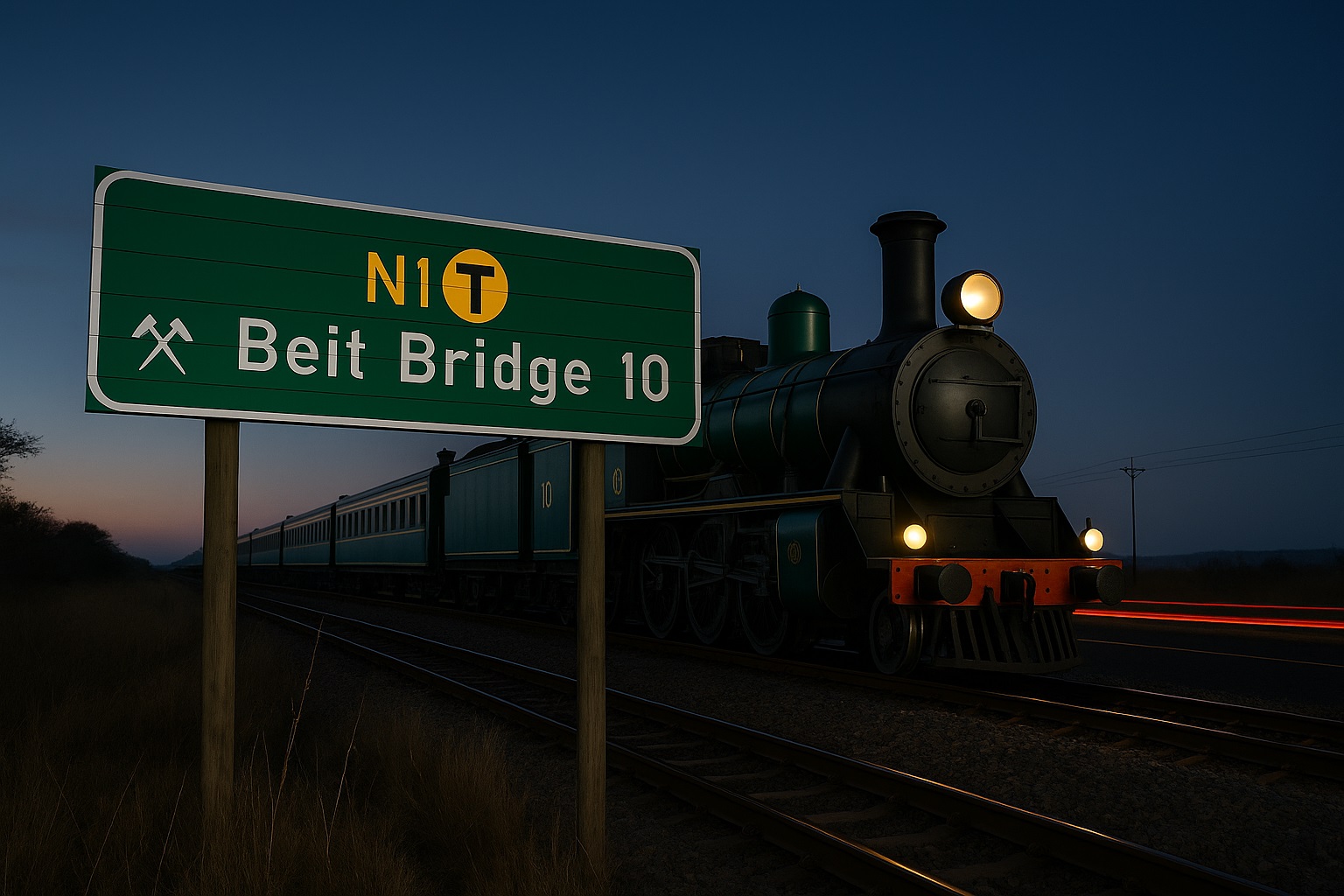
He sneaks into the TAZARA station in the early morning, the same station that has carried countless dreams southward. The freight train roars like a metallic beast preparing to swallow him whole. He doesn’t hesitate. He climbs. He hides. He breathes.
Dar es Salaam fades behind him as the last carriage shakes its way into the wilderness.
This isn’t just a journey. It’s an escape.

THE TRACKS OF SURVIVAL
Days blur into nights.
Forest becomes savannah.
Fear becomes habit.

On that long stretch from Tanzania through Zambia, Zimbabwe, and into South Africa, Chocho witnesses the world in ways the privileged never see:
Men holding onto train hooks for dear life
Women clutching babies that never cry
Strangers sharing bread like brothers
Border patrols whose presence silences entire wagons
The unspoken rule: if you fall, the train doesn’t stop
This is migration stripped of romance.
This is the price of hope.

ARRIVAL IN A CITY THAT DOESN’T CARE
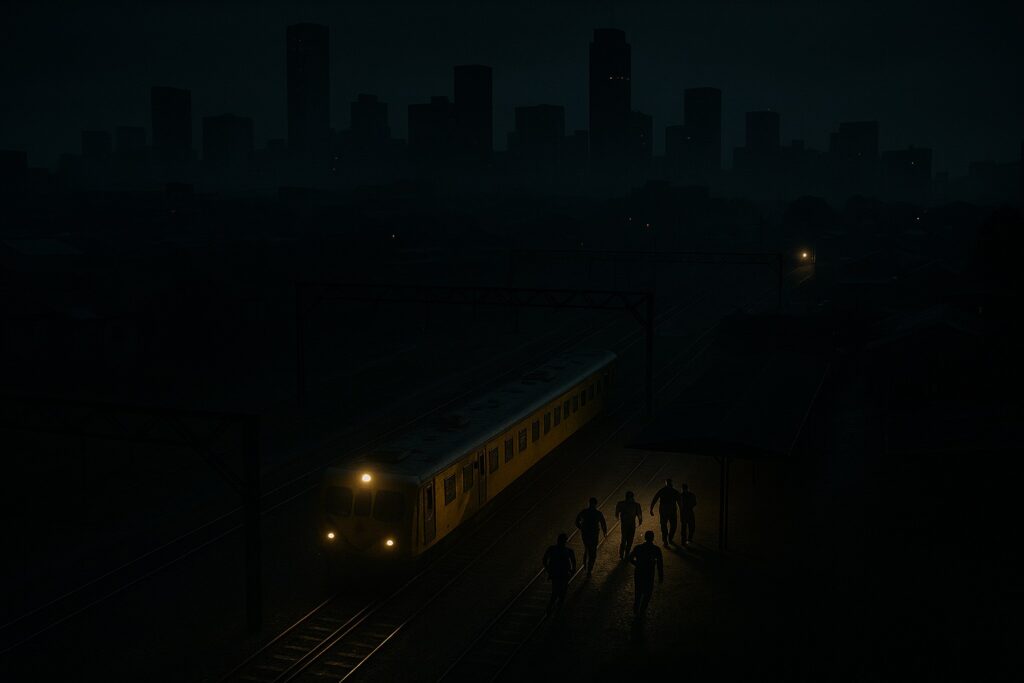
When the train finally screeches into Johannesburg, dawn refuses to break. The city is wrapped in a power blackout, smothered in mist, towering like a concrete jungle with secrets older than its skyscrapers.
Chocho jumps down from the freight train tracks—dusty, exhausted, undocumented, and unwelcomed. Jozi doesn’t greet him. Jozi tests him.
Here, he learns quickly:
Poverty follows you across borders
Police do not need a reason
Hustle becomes your only oxygen
Fear becomes your silent roommate
Survival is an everyday exam
He walks into the city cautiously, swallowed by its towering silhouettes.
Every migrant is a ghost before they become a person.
THE SOUNDTRACK OF A THOUSAND MIGRATION STORIES
The soundtrack—crafted by Nasibu the Vibe—carries the pulse of the journey:
The metallic heartbeat of the train
The hush of night-time walking
The tension of border crossings
The echo of danger
The rhythm of survival
The soulful whispers of hope
It is not just music.
It is memory.
It is testimony.
It is the heartbeat of the undocumented.
CHOCHO: A CHARACTER, A SYMBOL, A MIRROR
Chocho is fictional.
But Chocho is real.
He represents:
The 3+ million undocumented migrants living in South Africa
The boys from Dar, Lusaka, Blantyre, Harare, and Maputo who disappear into cities looking for better lives
The forgotten stories behind every construction site, every kitchen, every delivery bike, every street corner hustle
Chocho is the boy you knew.
Or the boy you could have been.
MAKING ART OUT OF MIGRATION
Last Train to Jozi is more than a film.
It is a tribute.
A protest.
A memory.
A warning.
And a creative offering to a continent with millions of untold stories.
Written and directed by Nasibu Mahinya, the film stands as part of a larger universe—your Chocho Phantom lore, your musical storytelling, your cross-border creative identity.
It is African.
It is raw.
It is honest.
It is ours.
BASED ON TRUE STORIES
Migration is not fiction.
It is a ritual of the brave and the desperate.
People cross borders:
By train.
By foot.
By trucks.
By hope.
This AI-generated short film honours them.
This music remembers them.
This story gives them a voice.
JOIN THE JOURNEY
WATCH. LISTEN. FEEL.
Let the film move you.
Let the music haunt you.
Let Chocho walk beside you.
And when you’re done—share it.
Because stories like these don’t just entertain.
They matter.